THROUGH A CHILD'S EYES
TYPE
Team Project
ROLE
Design Lead
TOOLS
Figma, Unity, ElevenLabs
TIMELINE
10 weeks, shipped Dec 2023
TEAM
2 designers 2 developers
Designing a product that communicates mindfulness in a way whimsical and playful enough to stick in children's hyperactive minds.
OVERVIEW
THE CHALLENGE
Children struggled to sit still, parents struggled to teach.
We set out to make a parenting tool, inspired by the hard work we'd seen parents around us put into raising us. After many interviews, school and house tours, and experiments, two things were clear: children struggled to sit still, and parents didn't know how to teach them in a way that they'd listen.
THE SOLUTION
A VR meditation game guided by an anthropomorphic Panda.
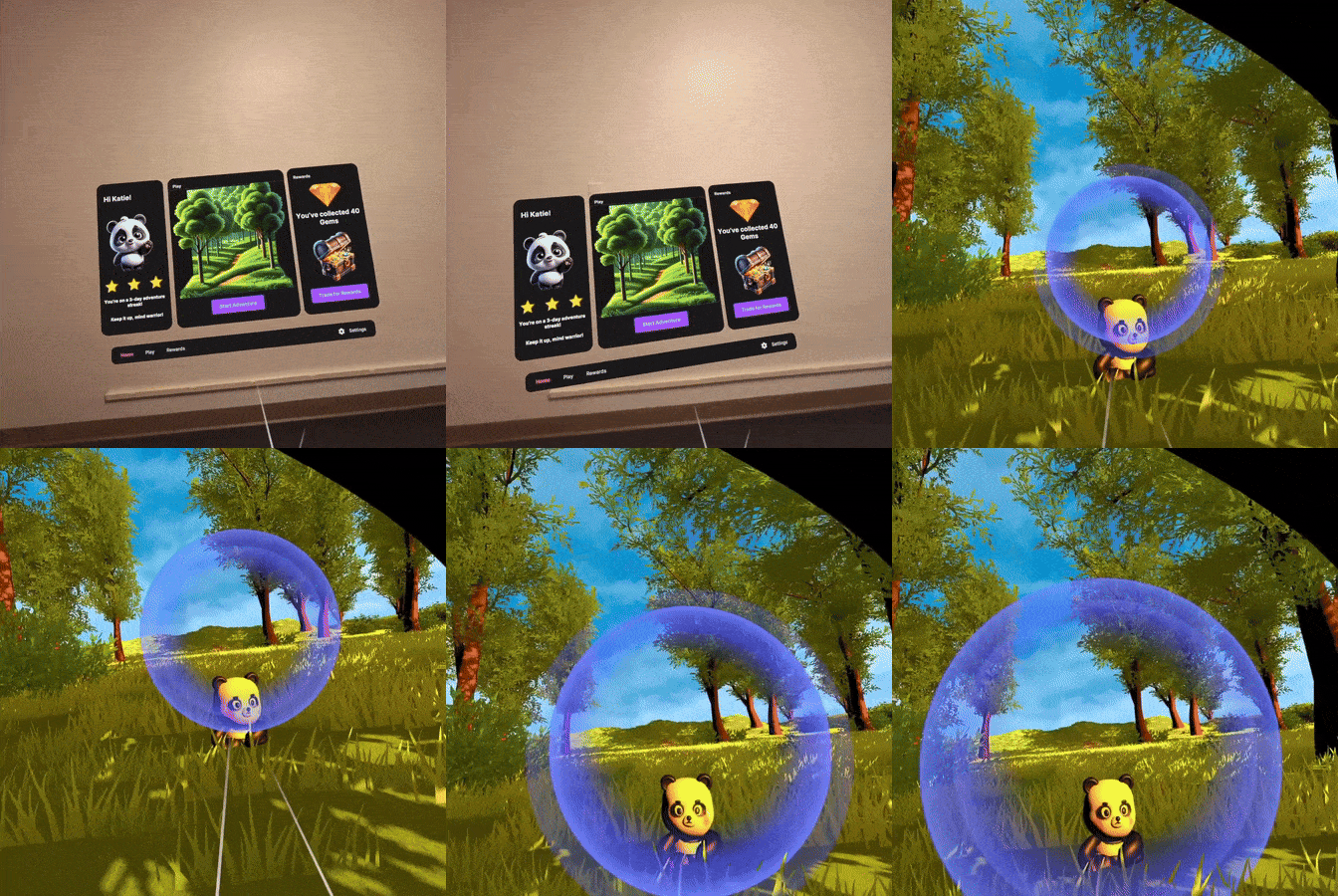
We launched MindCompass, a children's mindfulness app for the Meta Quest. The app borrows from game design principles to drive engagement from children, and employs an anthropomorphic Panda to guide them through different meditation activities in virtual worlds.
THE IMPACT
Won Stanford's design expo, inducted into XR incubator.
Our MindCompass demo won Stanford's annual student design expo organized by the Computer Science department, and we were inducted into Stanford's annual XR incubator program on the basis of it. We reached a global audience and received an acquisition offer from a global palliative care nonprofit organisation.
THE PROCESS
foundational research
our final product
design details
THE DISCOVERY
RESEARCH METHODS (n = 15)
Semi-structured interviews
Home and location tours
Contextual inquiry
Experience prototyping
We started broad to learn about the biggest problems in childcare and childhood, and then used iterative research to narrow down our solution from there.
Through multiple studies, we learned that teaching young children mindfulness was both crucial and difficult. Separately, we were inspired by observing the tactics of experienced parents and teachers, who often had games and tricks up their sleeve to make lessons stick.
Could games be the pathway to teaching children mindfulness?
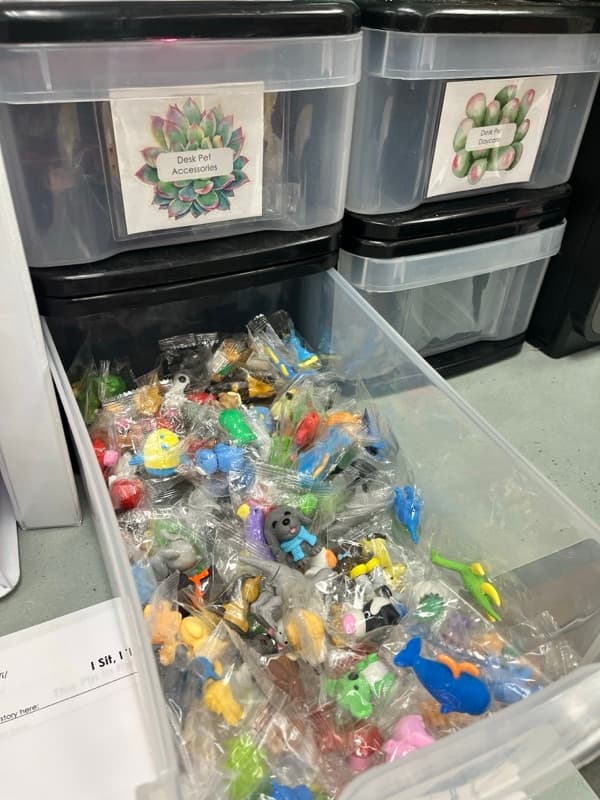
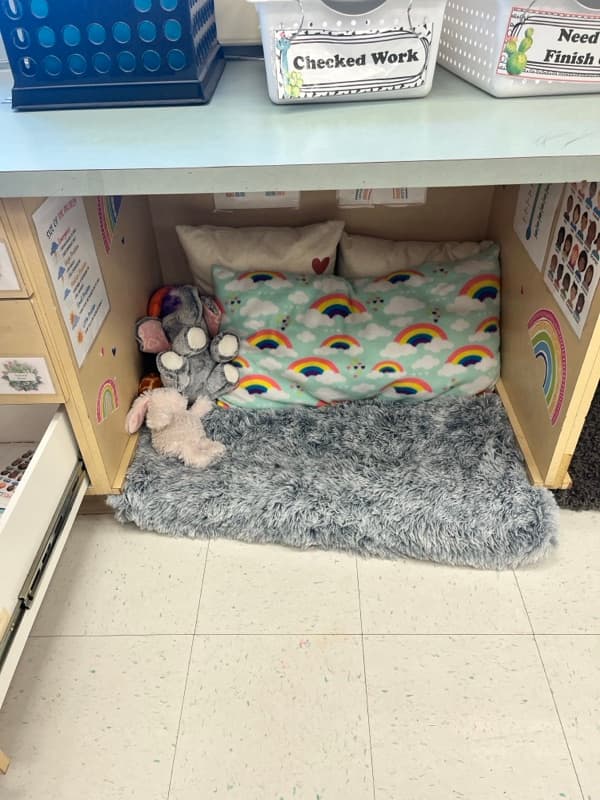
Toys and games were a crucial part of learning for children, as we observed in our interviews and location tours.
THE GENERATIONAL CREATIVITY GAP
Gamification seemed like a cool idea, so I designed a prototype to dig deeper. I recruited a parent and asked her to design a game to teach her child, to see how the process would work.
The observations were unexpected. Our participant got extremely flummoxed at the gamification task. Then, unprompted, her daughter grabbed the pen from her mom's hand and started drawing out an idea of her own.
I saw this pattern repeat in secondary research findings. I started to call this the "generational creativity gap:" Parents recognized games' effectiveness but felt paralyzed creating them. Children exist in an enhanced creative state that parents can't easily reach.
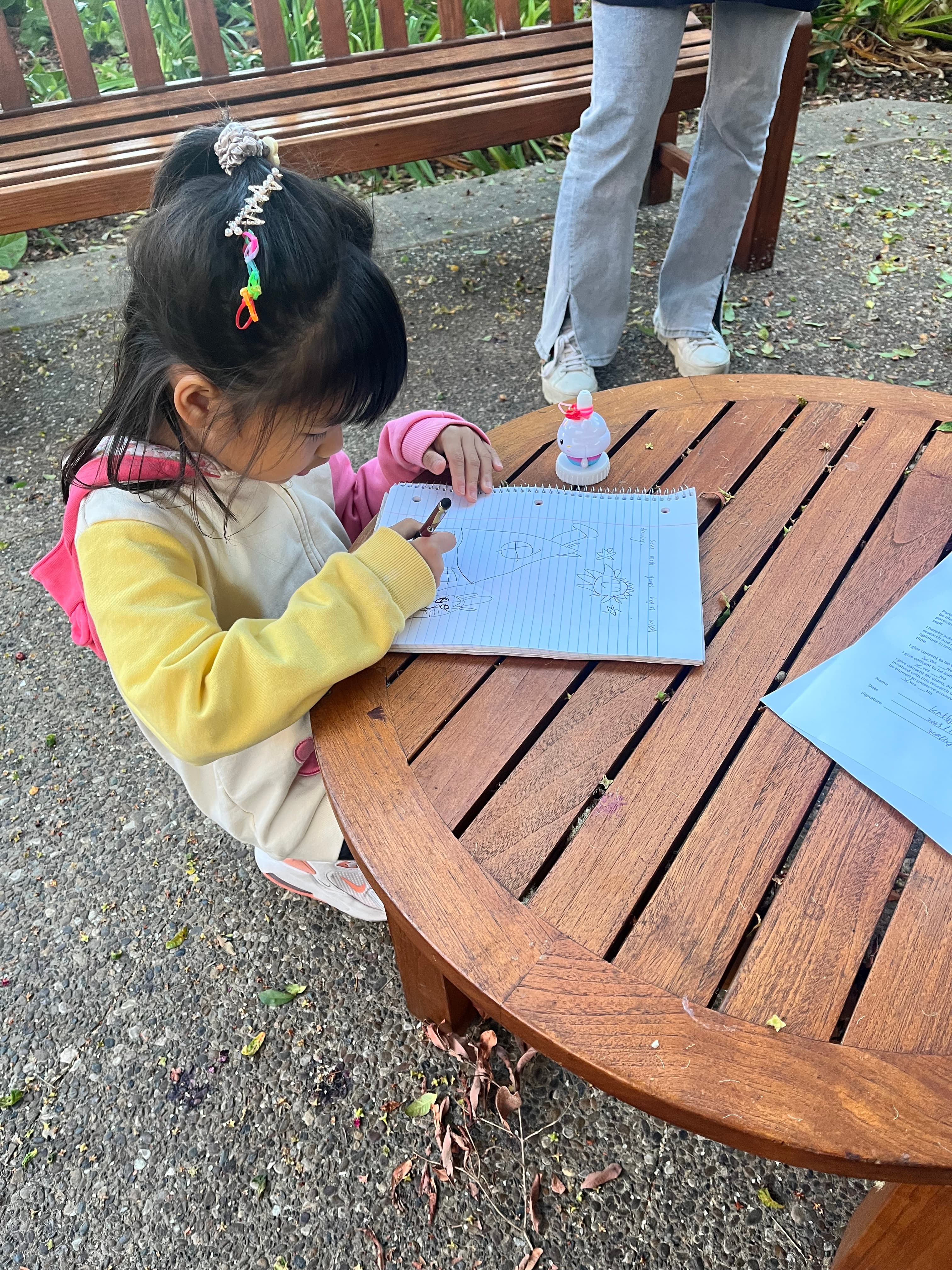
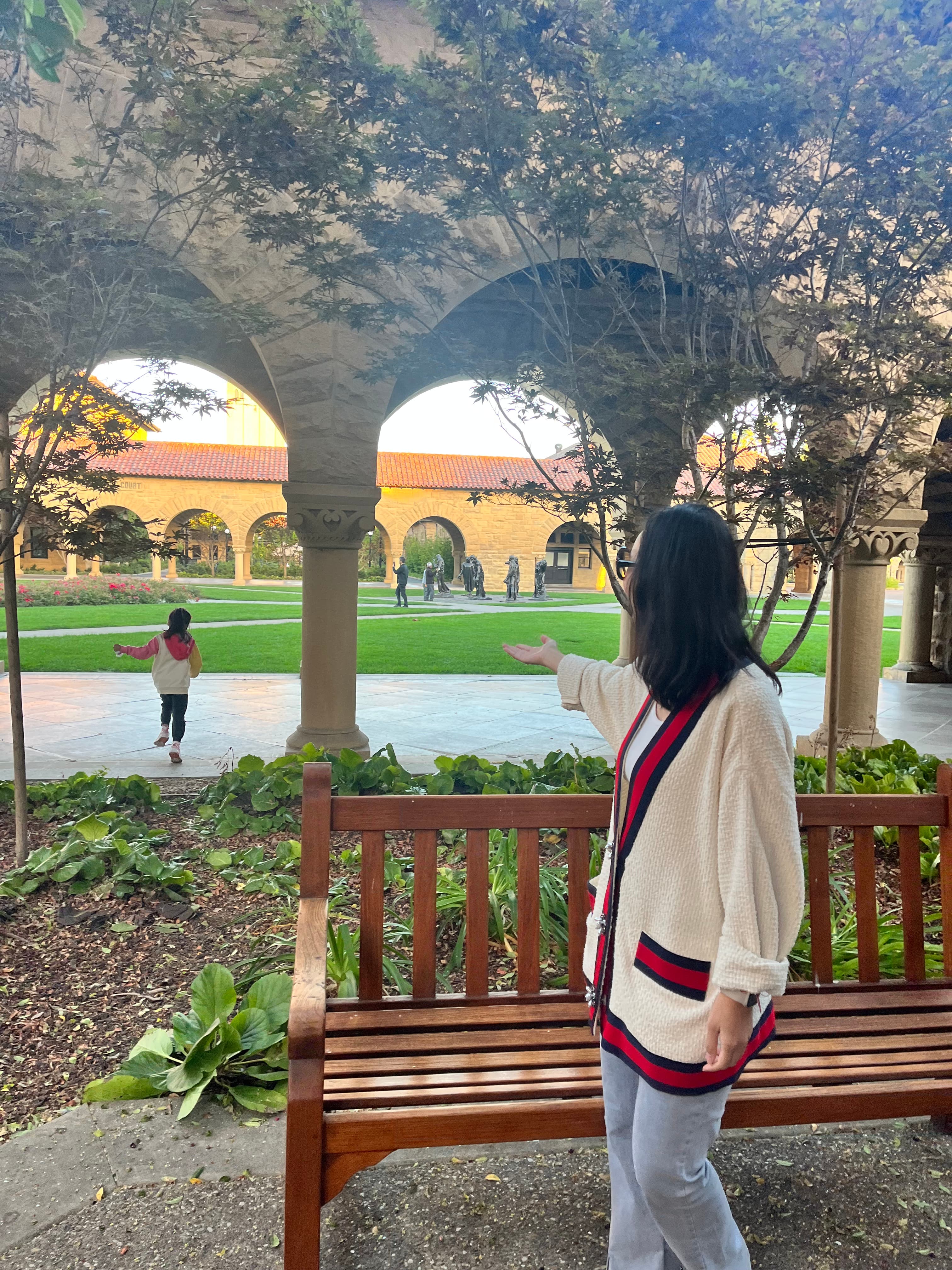
The restless child took over at the gamification task from our test participant, her mother, who had only a fraction of her child's creative energy.
Since parents couldn't meet kids at their creative level, we decided to build something that could.
This became the seed of MindCompass—a product that communicates mindfulness in a way whimsical and playful enough to stick in children's hyperactive minds.
foundational research
our final product
design details
MindCompass is a VR meditation experience designed for children on Meta Quest 3 headset. It incorporates gamification and an anthropomorphic Panda avatar to guide children through meditation, in a way that truly engages.
THE DEMO
2-minute walkthrough of MindCompass VR meditation experience
foundational research
our final product
design details
MODALITY AND CONSTRAINTS
Due to the immersive nature of a VR application, we found it to be the best modality to bring mindfulness to children, especially given the proven benefits of VR meditation apps over other screen-based apps1.
We acknowledged the constraints: lack of accessibility, affordability limiting scalability. But we predicted that hardware will soon advance to affordable VR headsets in every home, and decided to prototype an experience that makes a positive impact in that future.
Constraint
How we addressed it
Eye strain concerns
Designed experiences under a few minutes to minimize fatigue
Accessibility for deaf/HoH children
Implemented voice AND text cues for every action
Children who can't read well
Voice narration as primary guidance
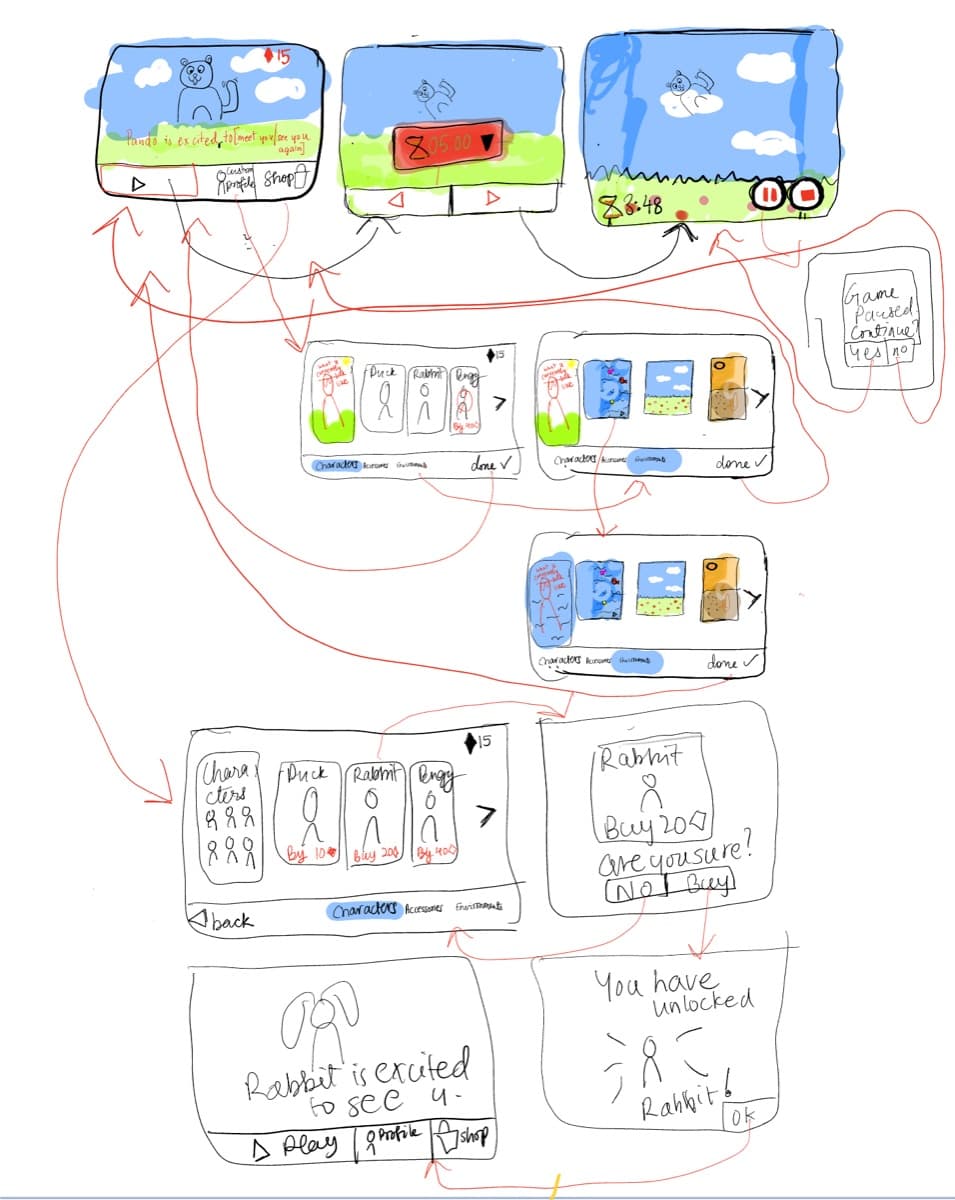
Low-fi sketches helped us articulate our ideas to the group to discuss tradeoffs. This is the sketch I constructed to showcase my idea for MindCompass VR, the concept that we eventually shipped.
CHARACTER DESIGN
We chose an anthropomorphic panda as our main avatar based on research on virtual animals in immersive experiences2. Studies have shown that furry, animal-like avatars in immersive experiences improve feelings of connection and presence. The soft, friendly appearance of our panda guide helps create a safe, non-threatening environment for mindfulness practice.
Pando, our MindCompass avatar
VISUAL LANGUAGE
We opted to use color to serve aesthetic as well as signalling purposes. Purple indicates interactive controls the child can tap, while pink draws attention to guidance and feedback. This distinction reduces cognitive load, as kids learn to recognize what's tappable without reading labels.
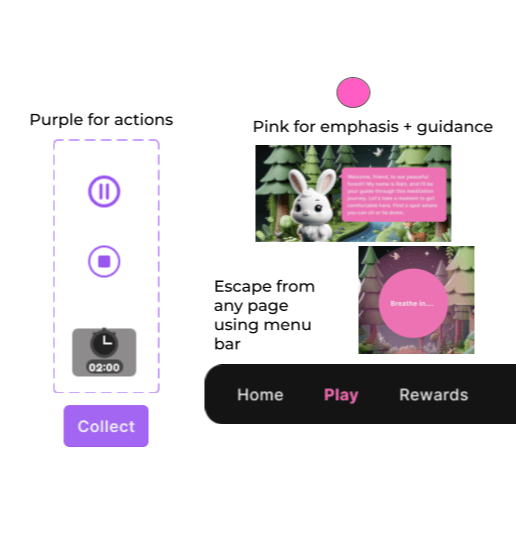
Using bright pink and purple accents helped us clearly delineate different action types
FINAL TOUCHES
We applied a heuristic evaluation to our med-fi prototype before coding it in Unity, as a low-cost way to add refinements such as robust error handling and ensure consistency. Heuristic evaluation is a process by which a design team can evaluate their own designs through comparing it against a list of design heuristics prepared by Jakob Nielsen3. We tag-teamed this process — while our co-design lead made the initial Figma mockup, I was in charge of applying design changes in accordance with the Nielsen heuristics.
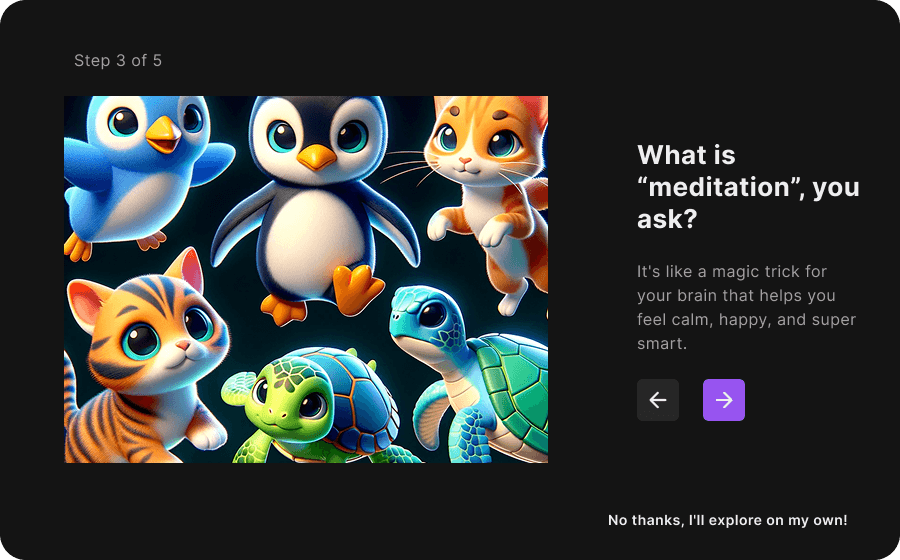
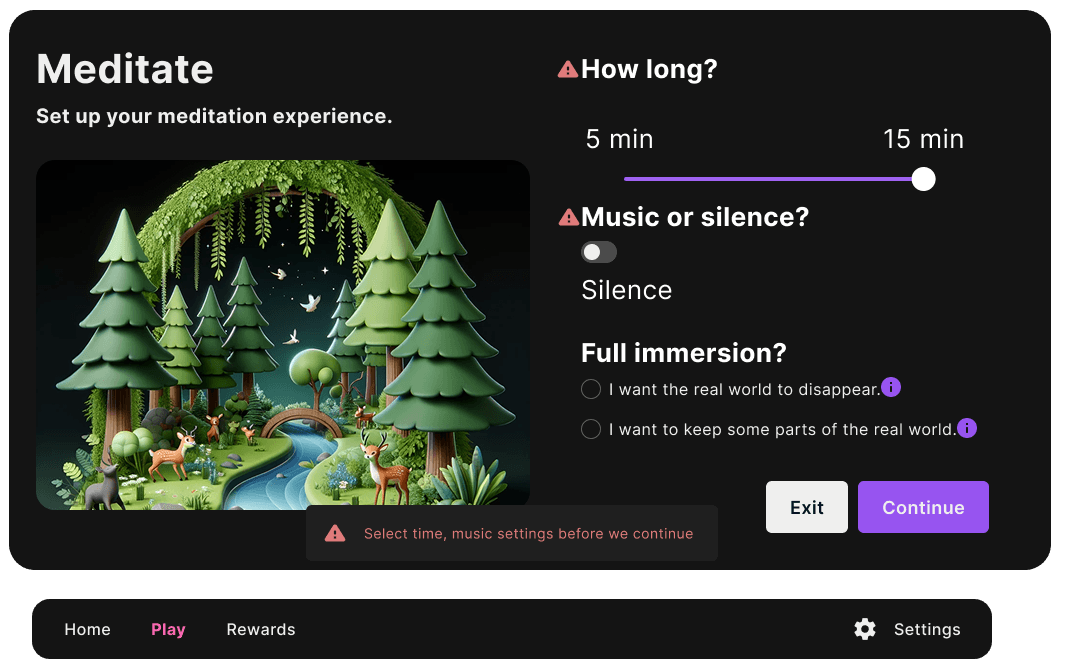
Two heuristic-driven changes: simpler onboarding copy and clearer error cues.
THE LAUNCH
I designed the narration of the meditation experience to create an immersive storytelling experience as well as designing a voice on ElevenLabs to bring our anthropomorphic Panda to life. We handed off designs to our developer who built out the experience on Unity using the ShapesXR plugin to leverage our Figma designs.
During the development phase, I was the designer on-call to make last minute design changes to ensure engineering feasibility such as editing the script to make it a shorter length, editing out any gestures or emotions that would not be feasible to implement given our timeline, and more.
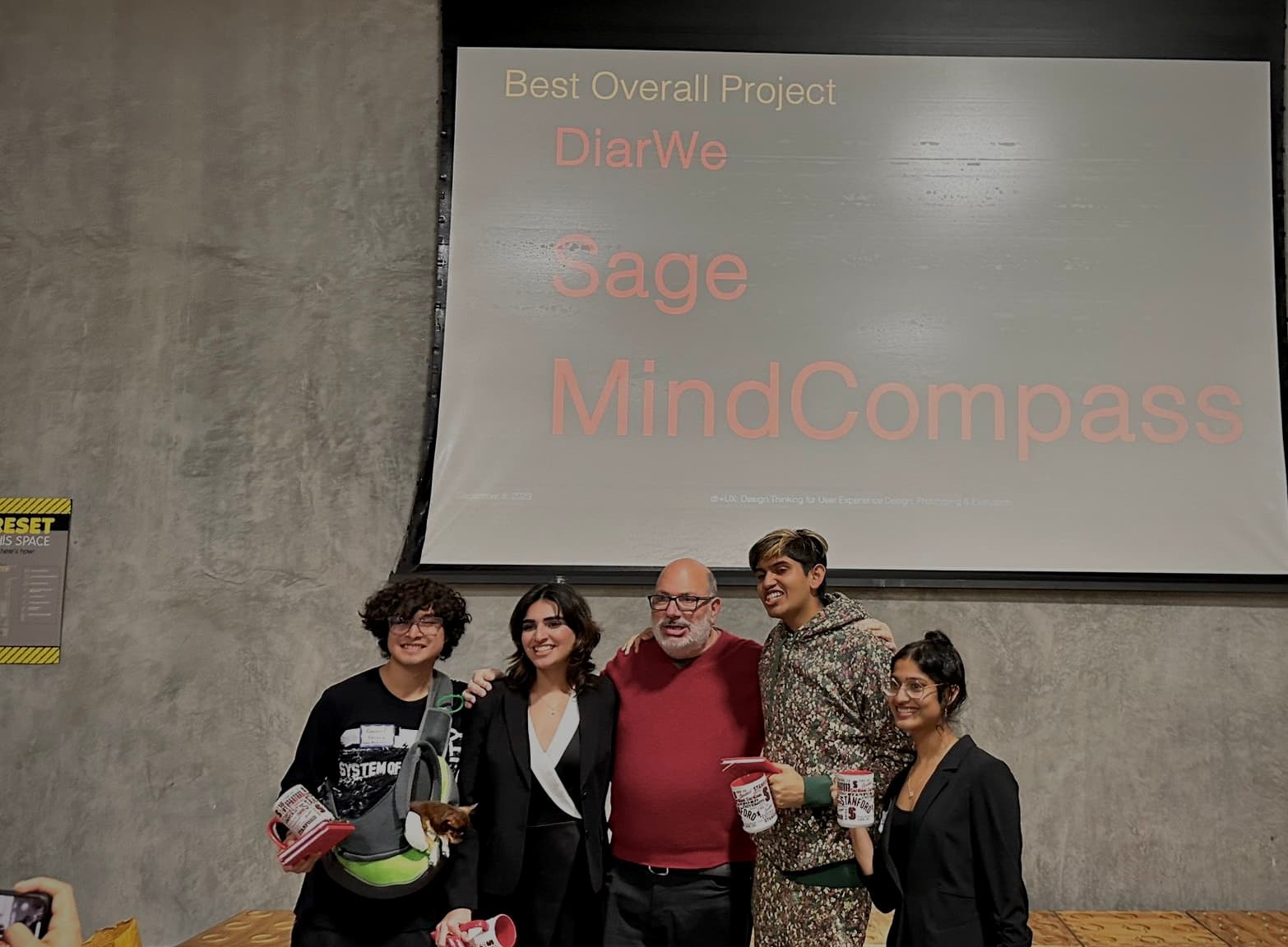
Our team at Stanford's 2023 UX Design Expo, where we won the Grand Prize and were awarded by Stanford CS Professor James Landay.
It was incredible working in such a hands-on team and having ownership of every aspect of the product development process. My main contributions were in articulating our main vision through analyzing our research data in creative ways, sketching out the VR concept based on which our app was designed, adding refinements to our final prototype based on a Nielsen heuristics evaluation, as well as designing the voice and narration of the game's main avatars, Captain Compass and Pando the Panda.
We went on to be inducted into Stanford 2024 XR Incubator class, where we iterated further, built a network, learned about business, and received an acquisition offer from a global palliative care startup.
References
Ma, J., Zhao, D., Xu, N., & Yang, J. (2022). The effectiveness of immersive virtual reality (VR) based mindfulness training on improvement mental-health in adults: A narrative systematic review. Explore, 19(3), 310-318.
View Paper →Norouzi, N., Bruder, G., Erickson, A., Kim, K., Bailenson, J., Wisniewski, P., Hughes, C., & Welch, G. (2021). Virtual animals as diegetic attention guidance mechanisms in 360-degree experiences. IEEE Transactions on Visualization and Computer Graphics, 27(11), 4321-4331.
View Paper →Nielsen, J. (1994). 10 usability heuristics for user interface design. Nielsen Norman Group.
View Article →